
Head D1, D2 and D3
The following three works filmed at the Klaipėda Regional Waste Management Centre explore the interaction between everyday human rituals and environmental pollution within the context of the Baltic Sea’s ecological crisis.
A waste management centre is not a neutral site — it is a place where the traces of consumer culture become visible and physically experienced.
Here, ritual loses its primordial meaning: washing and other repetitive actions acquire an ironic undertone within this context. The work neither accuses nor offers solutions. It simply exists in that place and asks questions.
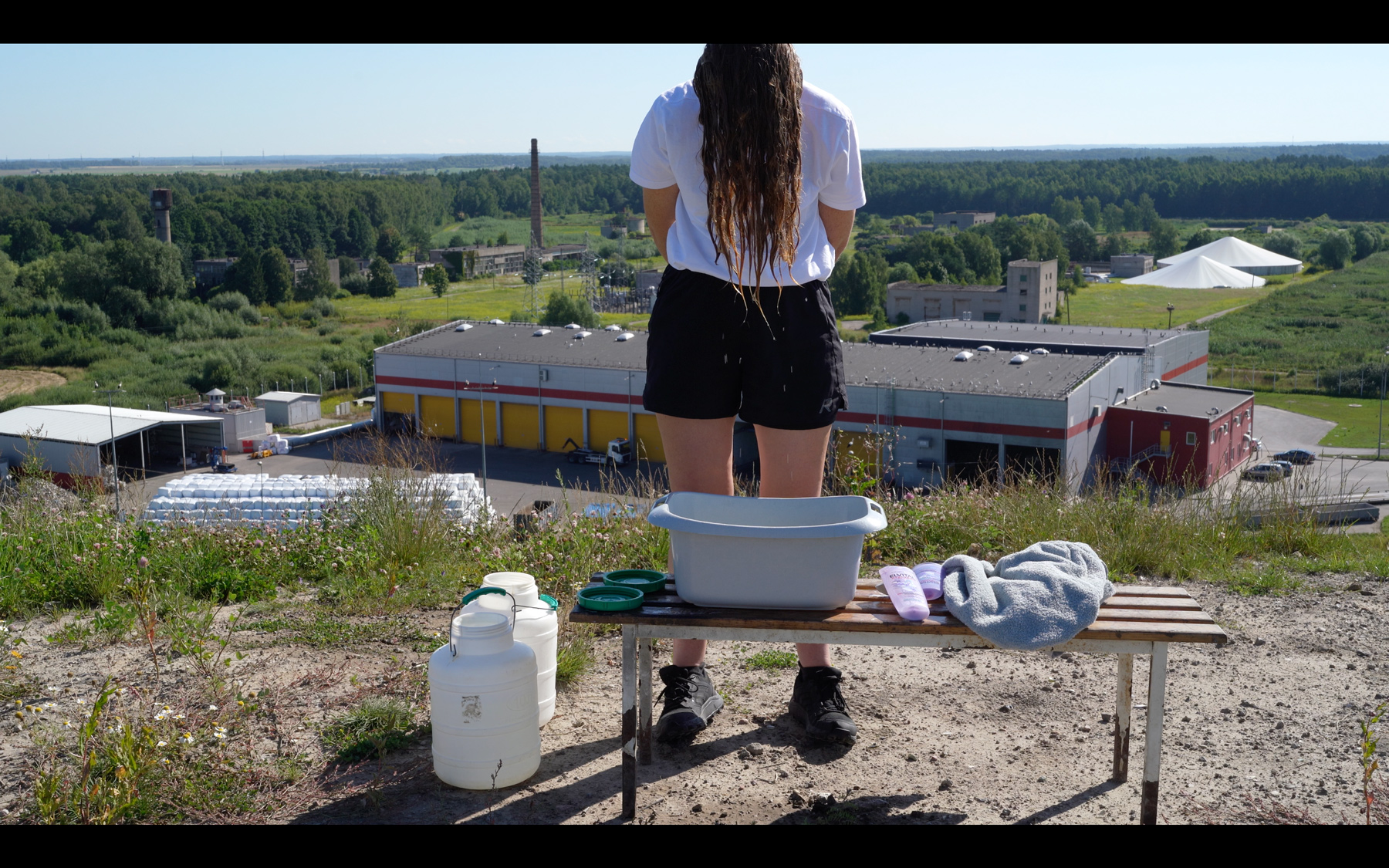
Head D1 (7:19 min.)
The performance was carried out on top of the highest completed waste mound, now covered in grass and looking almost like a natural hill. I have a personal connection to this place — growing up in Šilutė, I would often see this mound through the car window on the Klaipėda–Šilutė road. I watched it grow. The ritual of washing hair in a plastic container here becomes an ambiguous act: an everyday, intimate gesture, yet performed on a mountain of waste accumulated by human hands. The water left after washing symbolically mirrors the liquids that travel through soil and rivers to reach the Baltic Sea — a sea surrounded and affected by the shores and waste of nine countries, which renews itself once every thirty, perhaps fifty years. It is almost enclosed, connected to the ocean only through the narrow straits of Denmark. What enters it remains for decades, giving rise to consequences of all kinds — eutrophication among them.
Head D2 (8:19 min.)
Filmed at the foot of the waste mound, where a new hill of construction and non-degradable waste is currently taking shape. It is a place between beginning and end — not yet formed, still in process.
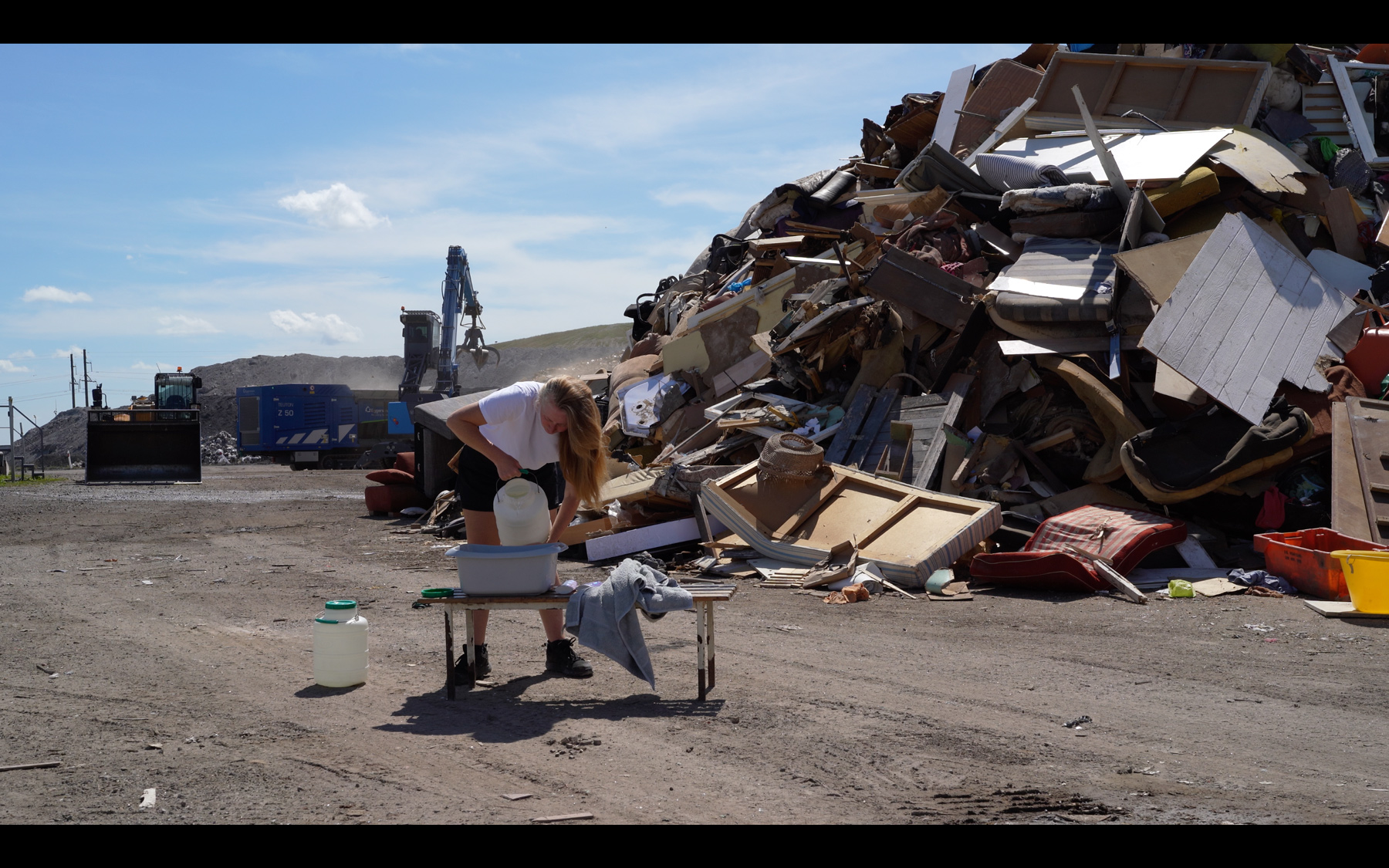
Head D3 (9:11 min.)
The performance was enacted at a wood and furniture waste sorting facility, where waste is shredded and turned into wood chips. A worker at the centre mentioned that these piles are symptomatically growing faster and faster. The speed of consumption at this site is invisible, yet palpable. Through this action, I seek to grasp it via repetitive bodily movements amid the noise of machines.
Screenshots
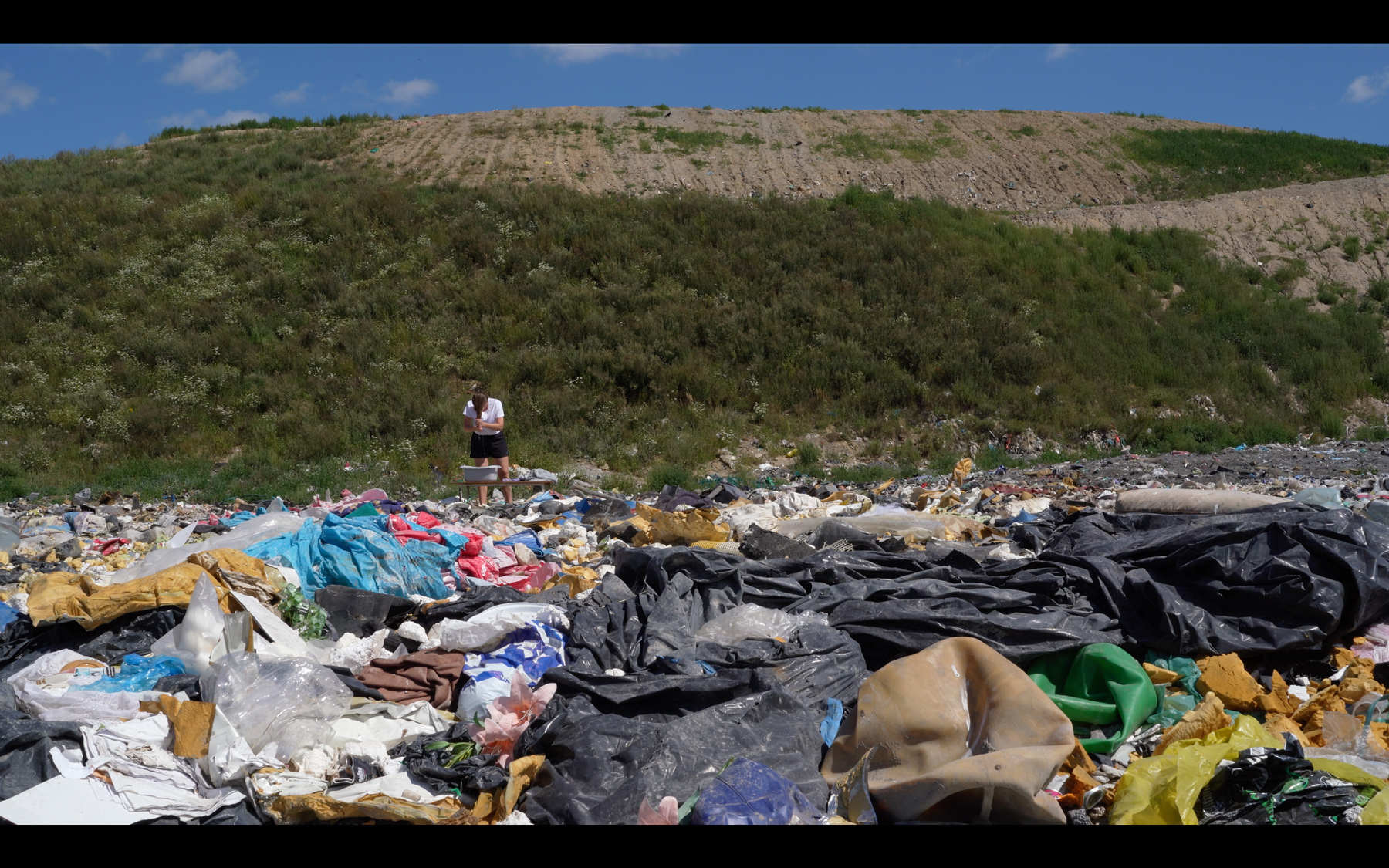
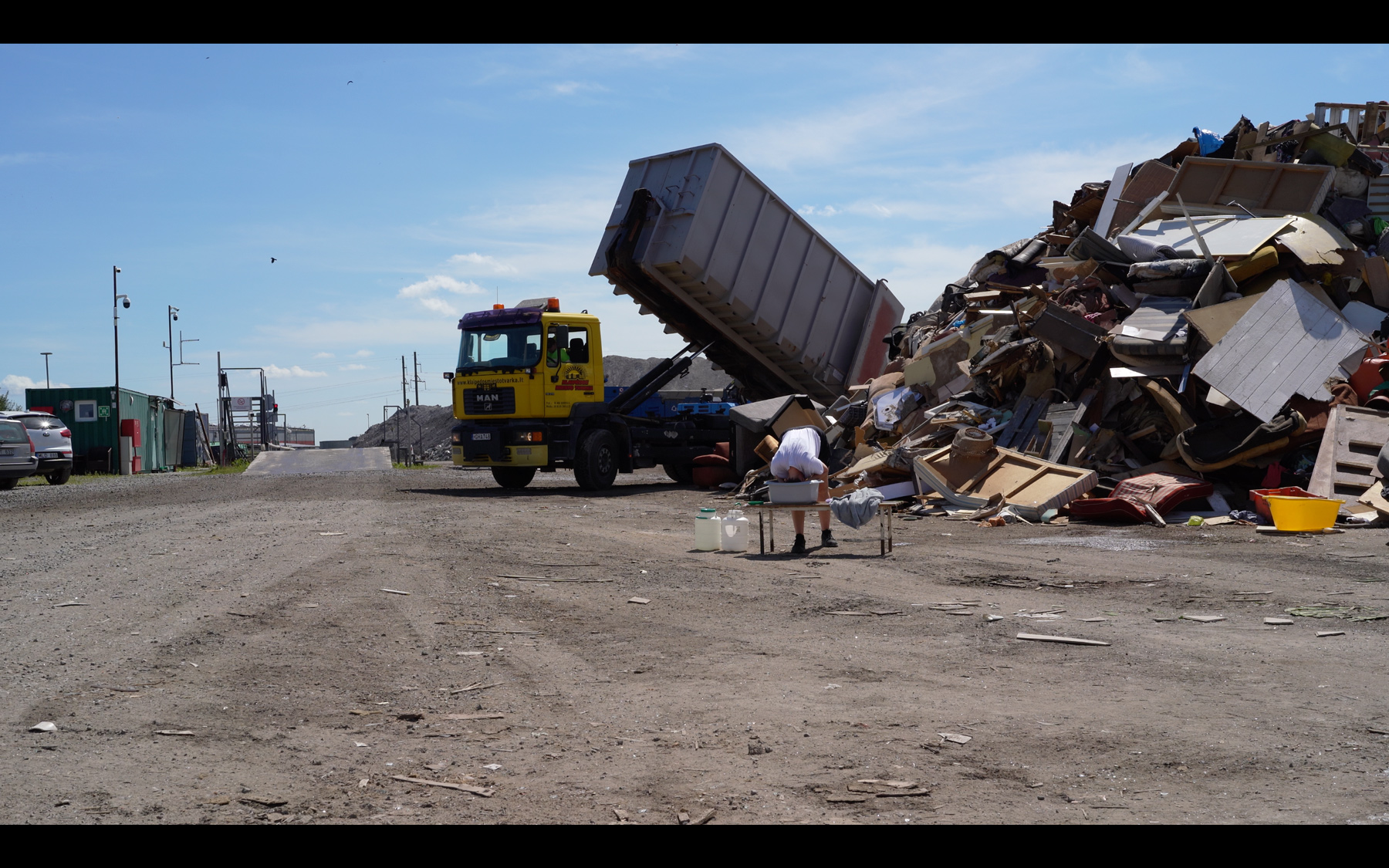
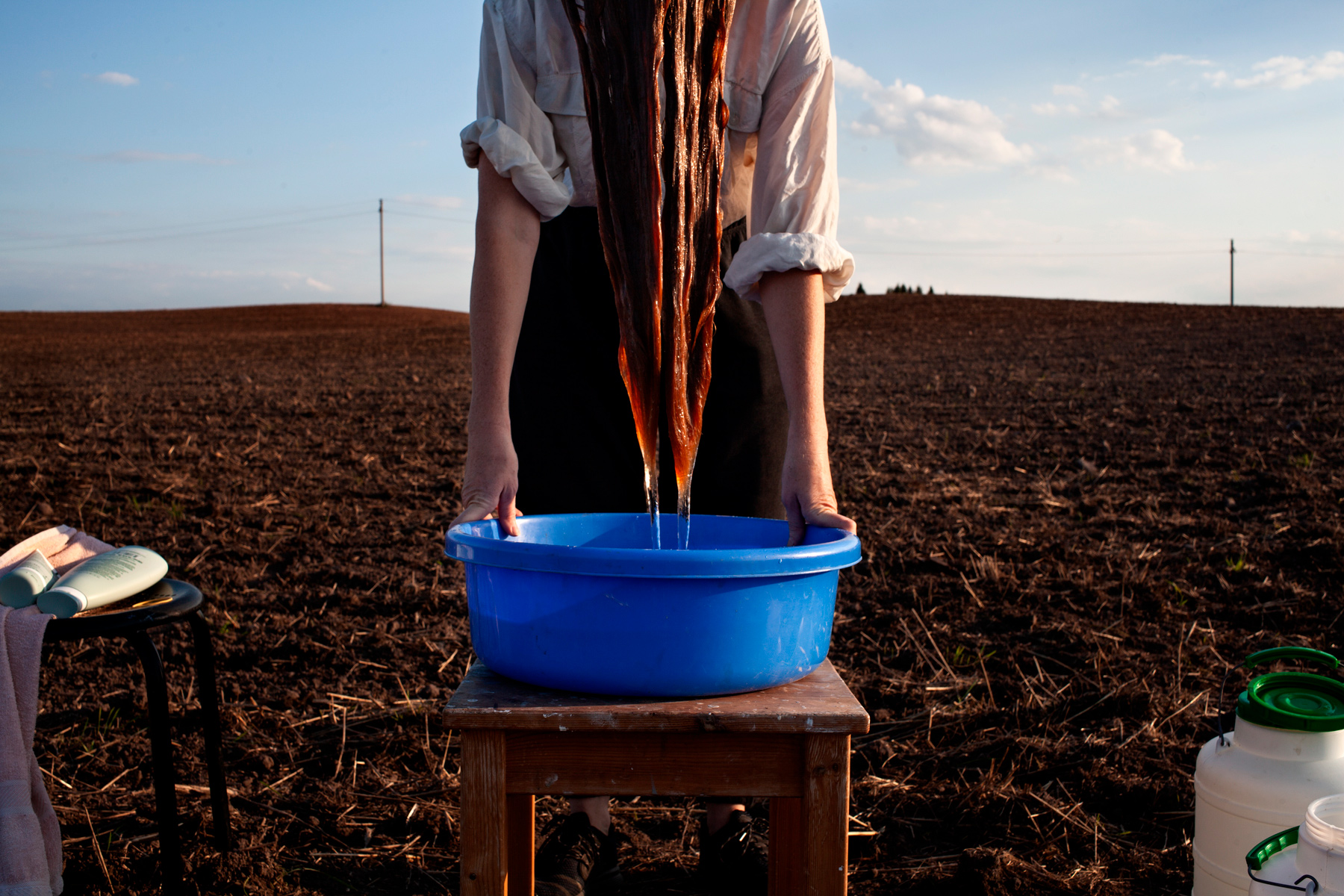
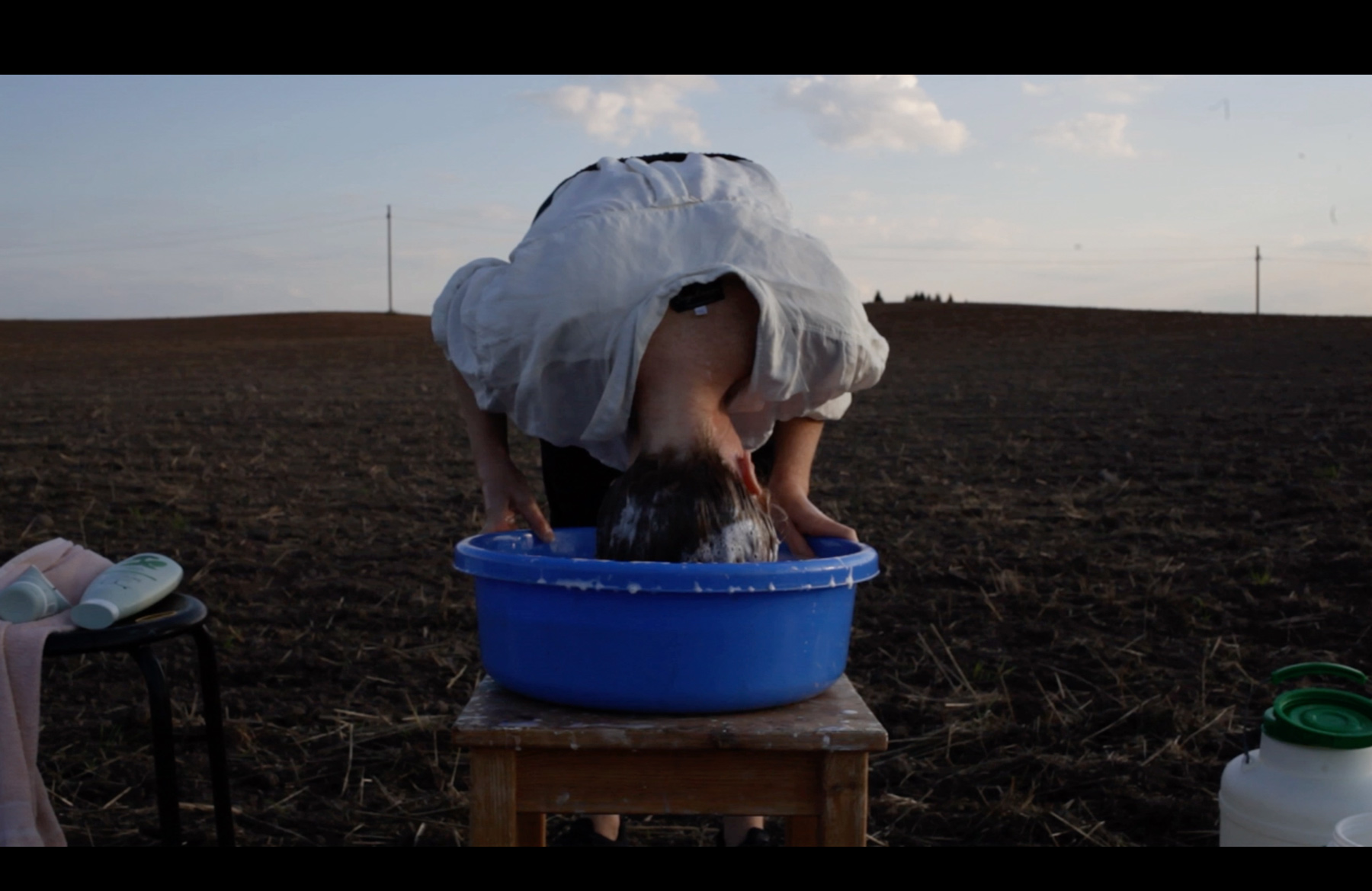
"Head" / In a Ploughed Field (2019 y., 8:23 min.)
A cultivated field, prepared every year — tilled, fertilised, sown. The act taking place in this ploughed earth reflects the cyclical logic of the land, and the artist’s body washing her hair in this space also appears to be readied for something. Once the washing is done, foamy water remains — it seeps into the soil and flows through groundwater into streams, then into rivers, and from rivers into seas. Travelling with this water are the indestructible remnants of human consumption: traces of pharmaceuticals, particles of hygiene products, synthetic fragrances, micro-pollutants that neither the body nor filtration systems fully remove. This poetically unethical act of washing one’s hair in a ploughed field becomes a kind of miniature model of human activity…
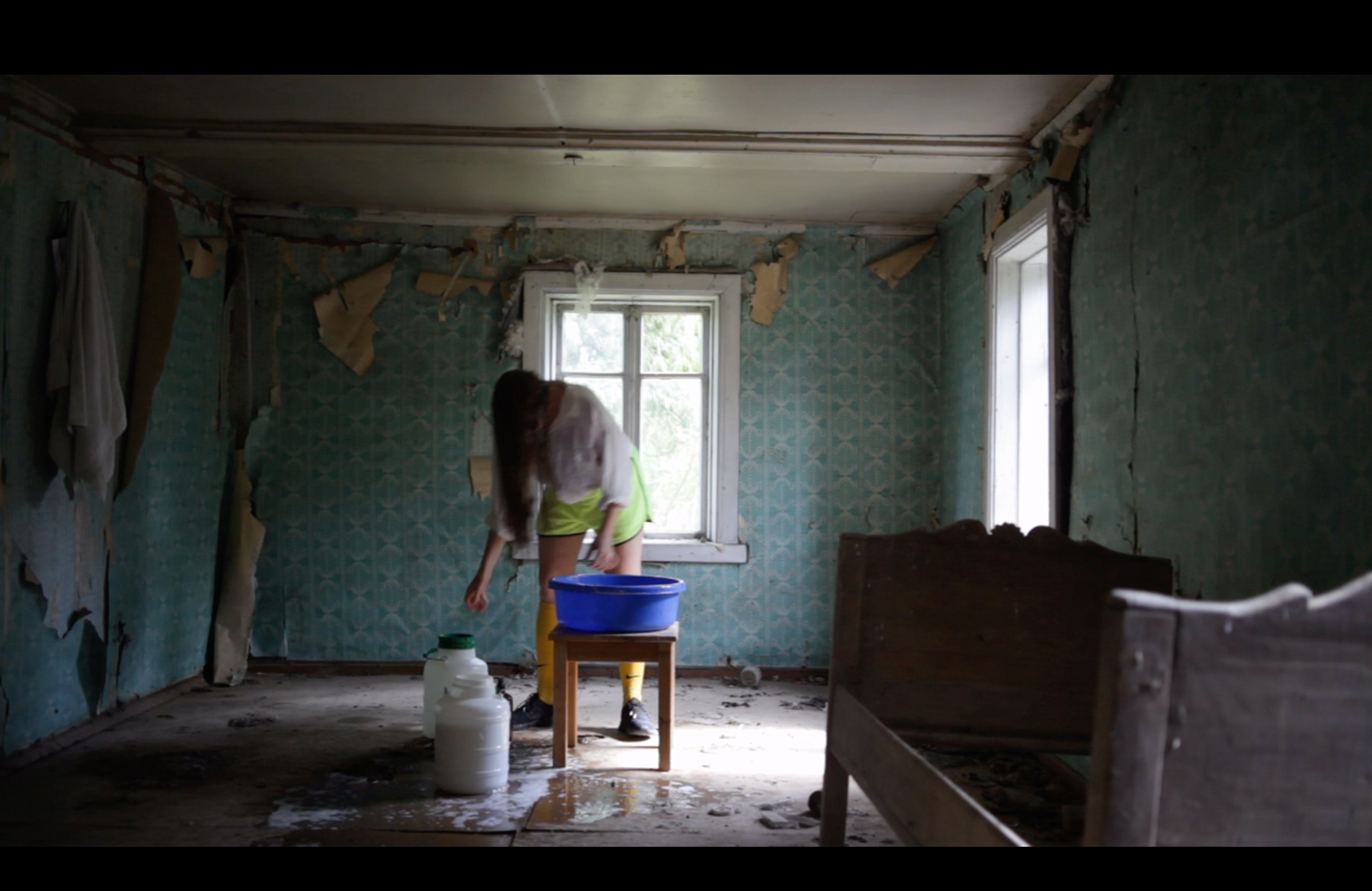
"Head" / Abandoned House (2021 y., 10:25 min.)
A house where someone once lived, performed the same everyday actions – and left. The performance in this space becomes a kind of question about inherited habits: how many rituals do we carry out not by choice, but out of inertia passed down through generations? Water falls on wooden floors, beneath which there is earth and a cool gap of air.
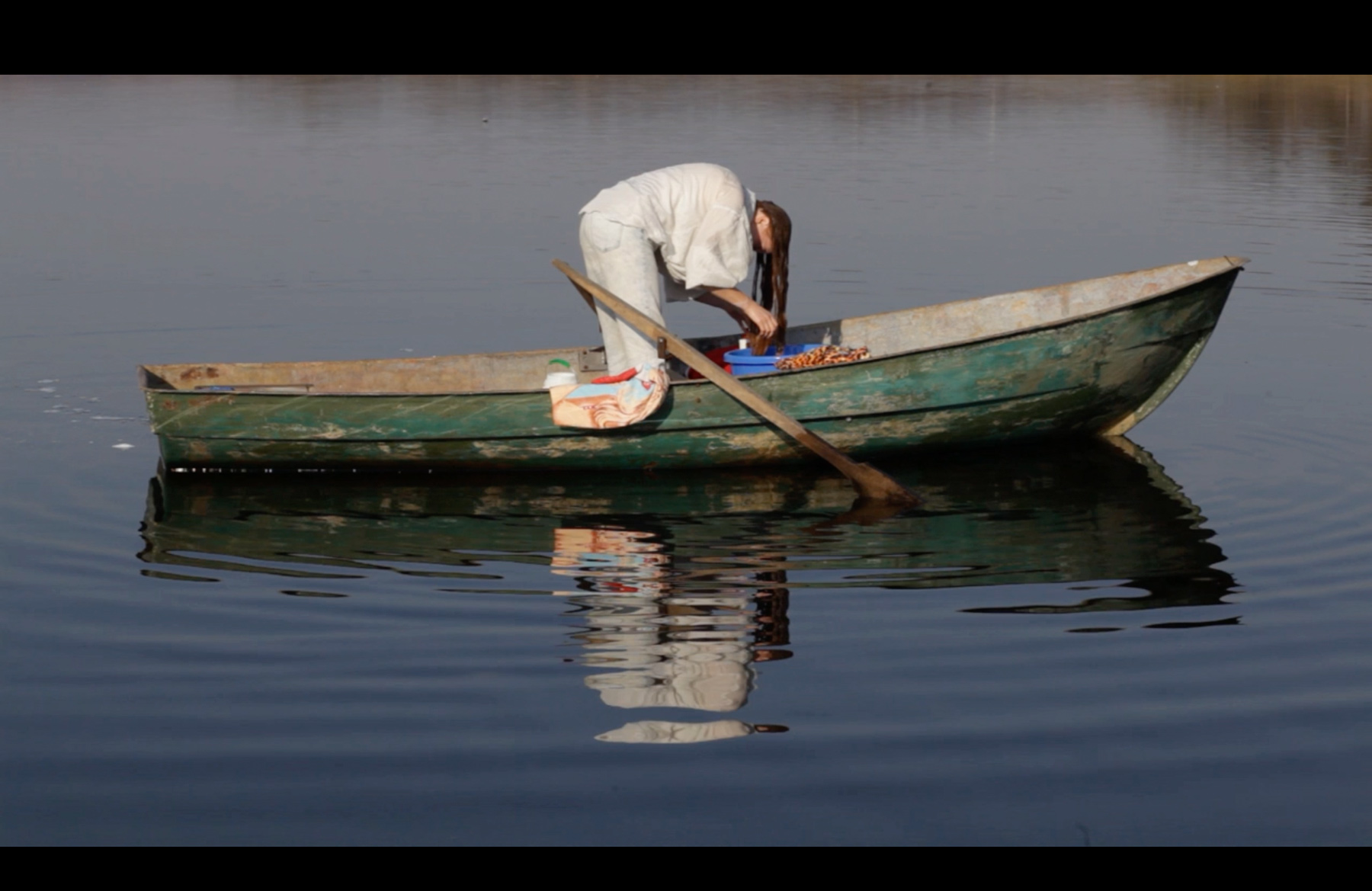
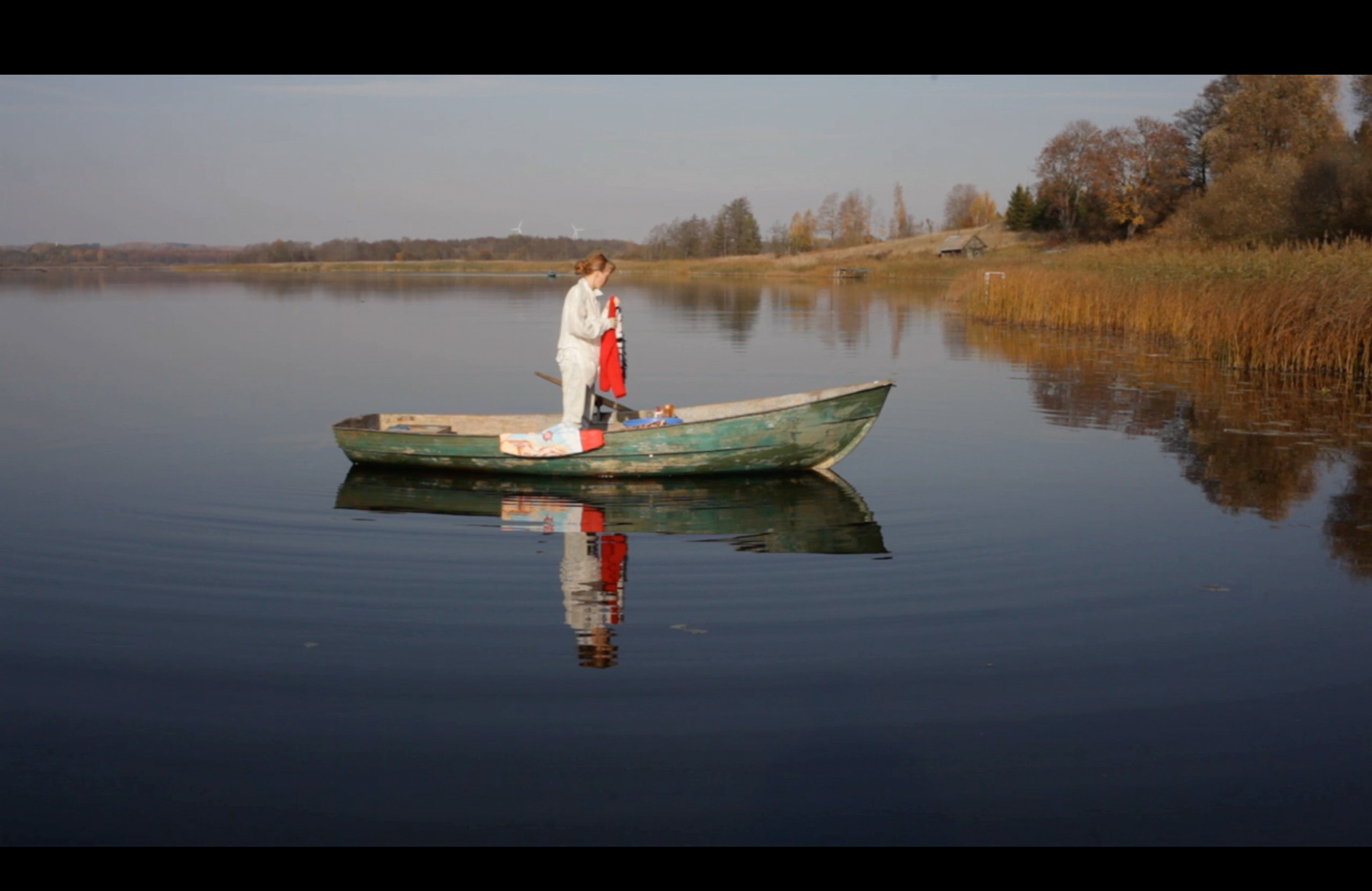
"Head" / Lake Sartai (2018 m., 10:11 min.)
A boat on Lake Sartai, far from the shore — I wash my hair in water I have brought with me. Sartai is branched like a tree, stretching 79 kilometres; the Šventoji river runs through it, and eleven streams flow into it.
Around the lake lie cultivated fields and meadows. Fertilisers, pesticides, topsoil — everything on the surface of the land travels through rain and groundwater into streams, into the lake, into the Šventoji. Through the Neris and the Nemunas — into the Curonian Lagoon and the Baltic Sea. The water of Sartai renews itself five times a year. The Baltic Sea — once every thirty, perhaps fifty years. It is almost enclosed, connected to the ocean only through the narrow straits of Denmark. What enters it remains for decades. The water I brought in a plastic container and the water I float in are part of the same cycle.
The water I brought in a plastic container and the water I am floating in are part of the same cycle.
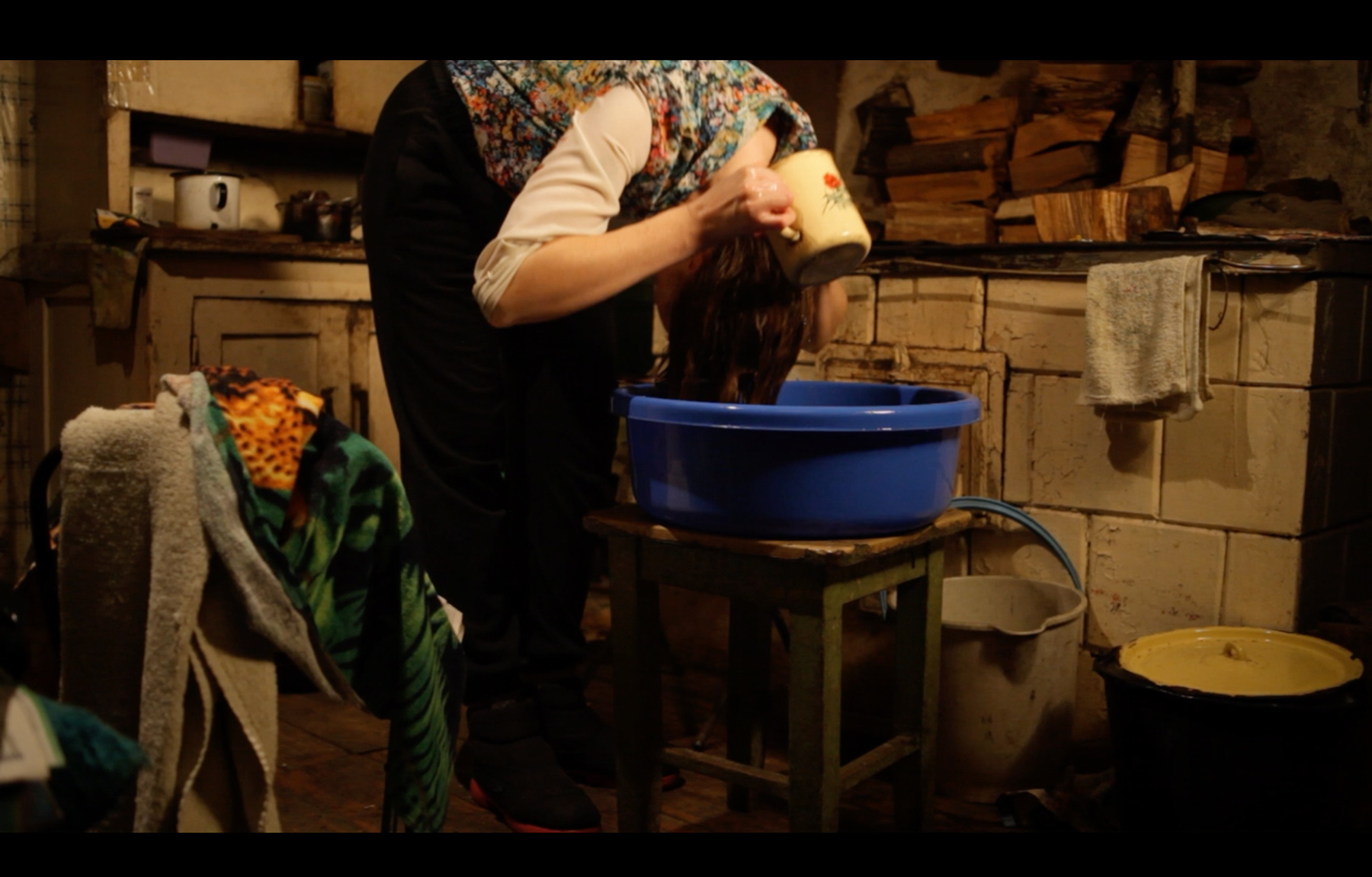
"Head" / New Year's Eve (2018 y., 15:16 min.)
The performance took place in the home of a village resident. There is no running water in her house. In our village, many homes still don’t have it. That evening in this house felt like any other, but the air carried a sense of waiting and a felt passage from one year into the next.
Screenshots